


External plumbing is one of the most important systems in any residential, commercial, or industrial building. While people usually notice the beauty of walls, windows, and paint, the plumbing network works silently behind the scenes to ensure the continuous supply of clean water and the safe disposal of wastewater. A well-designed external plumbing system increases the durability of the building, reduces maintenance costs, and provides a reliable water supply for decades.
Modern construction projects commonly use PPR (Polypropylene Random Copolymer) pipes for water supply and PVC (Polyvinyl Chloride) pipes for drainage and waste disposal. Both materials have transformed the plumbing industry because they are lightweight, corrosion-resistant, durable, and cost-effective compared to traditional metal pipes.
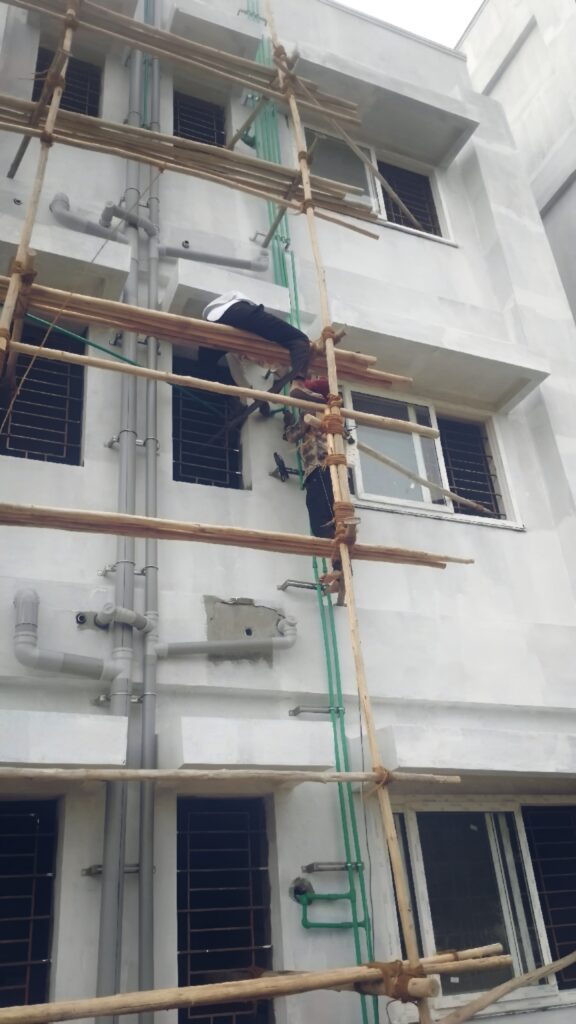
The image above shows an example of an external plumbing installation on a multi-storey building. Green PPR pipes are installed vertically for water supply, while grey PVC pipes are used for wastewater drainage. Proper alignment, support clamps, and professional installation ensure efficient operation and easy maintenance in the future.
What Is External Plumbing?
External plumbing refers to all plumbing work installed on the outside surface of a building. Unlike concealed plumbing, which is hidden inside walls and floors, external plumbing remains accessible for inspection, maintenance, repairs, and future upgrades.
External plumbing generally includes:
- Fresh water supply lines
- Rainwater drainage
- Wastewater disposal
- Vent pipes
- Sewer connections
- Overflow pipes
- Pump delivery lines
- Fire fighting water lines
Proper planning of external plumbing helps avoid water leakage, pipe damage, and unnecessary demolition during repairs.
Understanding PPR Pipes
PPR stands for Polypropylene Random Copolymer. It is one of the most reliable materials used for hot and cold water supply systems.
These green-colored pipes are joined using heat fusion welding, creating a leak-proof connection that becomes almost as strong as the pipe itself.
PPR pipes are widely used in:
- Apartments
- Hospitals
- Hotels
- Schools
- Villas
- Commercial complexes
- Industrial buildings
Because the joints are permanently fused, there is very little chance of leakage compared to threaded metal pipes.
Advantages of PPR Pipes
1. Corrosion Resistance
Unlike iron or galvanized pipes, PPR pipes do not rust or corrode even after many years of use.
This makes them suitable for areas with high moisture and hard water.
2. Long Service Life
Under normal operating conditions, PPR pipes can last more than 50 years.
Their durability reduces replacement costs throughout the building’s lifespan.
3. Safe for Drinking Water
PPR material does not contaminate drinking water.
It is non-toxic and does not affect water taste or smell.
4. Heat Resistance
One of the biggest advantages of PPR is its ability to carry hot water.
It performs efficiently at high temperatures without deforming.
5. Leak-Free Joints
Heat fusion technology creates permanent joints.
Unlike threaded joints, these welded connections eliminate leakage risks.
6. Lightweight
PPR pipes are much lighter than metal pipes.
Transportation and installation become faster and easier.
7. Smooth Internal Surface
The inside surface remains smooth for many years.
This minimizes pressure loss and prevents mineral deposits.
Understanding PVC Pipes
PVC stands for Polyvinyl Chloride.
It is one of the most commonly used materials for drainage systems.
PVC pipes are usually grey or white and are joined using solvent cement.
They are commonly installed for:
- Wastewater disposal
- Rainwater drainage
- Vent pipes
- Sewer connections
- Roof drainage
Advantages of PVC Pipes
Excellent Corrosion Resistance
PVC does not rust like metal pipes.
Even after years of exposure to moisture, its performance remains reliable.
Lightweight Construction
PVC pipes are easy to handle during installation.
Their low weight reduces labour costs.
Affordable
PVC is one of the most economical plumbing materials available.
It offers excellent performance at a reasonable cost.
Smooth Water Flow
The inner surface allows wastewater to flow freely.
This reduces clogging and improves drainage efficiency.
Easy Maintenance
Damaged sections can be replaced without disturbing the entire plumbing system.
Chemical Resistance
PVC resists many chemicals commonly found in wastewater.
This increases its durability in residential and commercial drainage systems.
Difference Between PPR and PVC Pipes
| Feature | PPR Pipe | PVC Pipe |
|---|---|---|
| Primary Use | Water Supply | Drainage |
| Water Temperature | Hot and Cold | Cold Wastewater |
| Joining Method | Heat Fusion | Solvent Cement |
| Pressure Resistance | High | Moderate |
| Drinking Water | Suitable | Generally Not Used |
| Life Expectancy | 50+ Years | 40–50 Years |
| Leakage Risk | Very Low | Low |
Importance of External Plumbing
A properly installed external plumbing system offers several long-term benefits.
Easy Inspection
Leaks can be detected quickly because the pipes remain visible.
Easier Maintenance
Repair work can be completed without breaking walls or floors.
Faster Replacement
Future renovations become simpler because pipes are easily accessible.
Cost Savings
Visible plumbing reduces labour costs during maintenance.
Improved Building Safety
Proper drainage prevents water accumulation, reducing structural damage.
Importance of Pipe Clamps
Pipe clamps support the plumbing system and prevent unnecessary movement.
Good pipe supports:
- Reduce vibration
- Maintain alignment
- Prevent sagging
- Protect pipe joints
- Increase service life
Proper Pipe Alignment
Professional plumbing follows straight vertical and horizontal alignments.
Benefits include:
- Better appearance
- Easier maintenance
- Reduced stress on joints
- Improved water flow
External Plumbing Installation Process
Professional installation generally follows these stages:
Site Survey
The plumbing layout is planned according to architectural drawings.
Pipe Marking
Water supply and drainage routes are marked carefully.
Wall Supports
Clamps and brackets are fixed before pipe installation.
Pipe Installation
PPR and PVC pipes are installed according to design specifications.
Jointing
PPR pipes are heat fused while PVC joints are bonded using solvent cement.
Pressure Testing
Water supply lines are tested under pressure.
Leakage Inspection
All joints are inspected before commissioning.
Final Finishing
Pipes are cleaned, aligned, labelled if required, and handed over.
Common Plumbing Mistakes
Many plumbing failures occur because of poor workmanship.
Common mistakes include:
- Incorrect pipe slope
- Loose pipe clamps
- Poor heat fusion
- Wrong pipe size
- Low-quality fittings
- Unsupported vertical pipes
- Sharp pipe bends
- Improper solvent application
Professional installation prevents these problems.
Maintenance Tips
To maximize pipe life:
- Inspect pipes periodically.
- Repair leaks immediately.
- Replace damaged supports.
- Clean drainage lines regularly.
- Protect exposed pipes from physical impact.
- Avoid hanging heavy objects on plumbing lines.
we should Preventive maintenance is always less expensive than emergency repairs.
Environmental Benefits
Modern plumbing materials also contribute to sustainability.
PPR and PVC pipes help conserve resources because they:
- Reduce water leakage.
- Require less maintenance.
- Have a long operational life.
- Use fewer replacement materials over time.
- Support efficient water management.
When installed correctly, these systems can reduce water wastage and improve the overall efficiency of a building.
Choosing the Right Plumbing Contractor
A quality plumbing installation depends not only on materials but also on skilled workmanship. Before hiring a contractor, consider:
- Experience with multi-storey buildings.
- Use of genuine pipes and fittings.
- Proper pressure testing procedures.
- Compliance with local plumbing standards.
- Clear workmanship warranty.
- Well-trained installation team.
Professional installation reduces the chances of future leaks and expensive repairs.
Conclusion
External plumbing plays a crucial role in maintaining the safety, efficiency, and long-term value of any building. Using PPR pipes for water supply and PVC pipes for drainage provides a durable and cost-effective solution for modern construction projects. PPR offers excellent strength, leak-resistant joints, and suitability for hot and cold water systems, while PVC delivers reliable drainage performance with minimal maintenance requirements.
A successful external plumbing system is the result of careful planning, high-quality materials, proper installation techniques, and regular maintenance. for apartments, commercial complexes, hospitals, schools, or individual homes, investing in a well-designed external plumbing network ensures dependable water distribution, efficient wastewater management, and lower lifecycle costs. By following industry best practices and employing experienced professionals, property owners can enjoy a plumbing system that performs reliably for many decades.
also click here
Share this content: