


Introduction
Construction projects often require excavation close to existing buildings, retaining walls, culverts, bridges, or compound walls. These situations demand careful planning because improper excavation can weaken the surrounding soil, damage nearby structures, or even cause collapse. One of the most reliable methods for supporting excavated soil is the construction of a stone masonry retaining wall with proper drainage provisions.

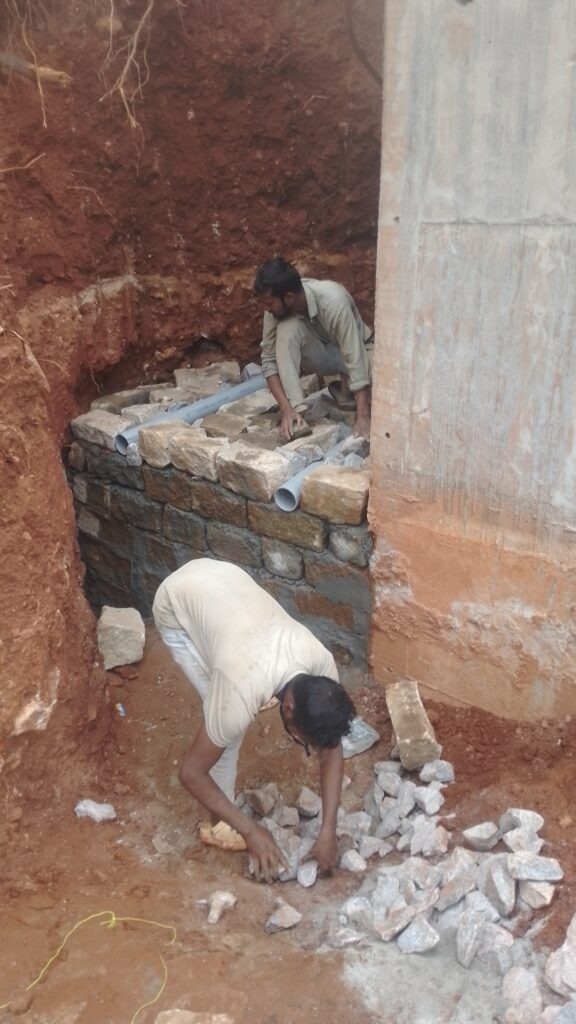
In construction site shown in the image demonstrates a practical example of this process.
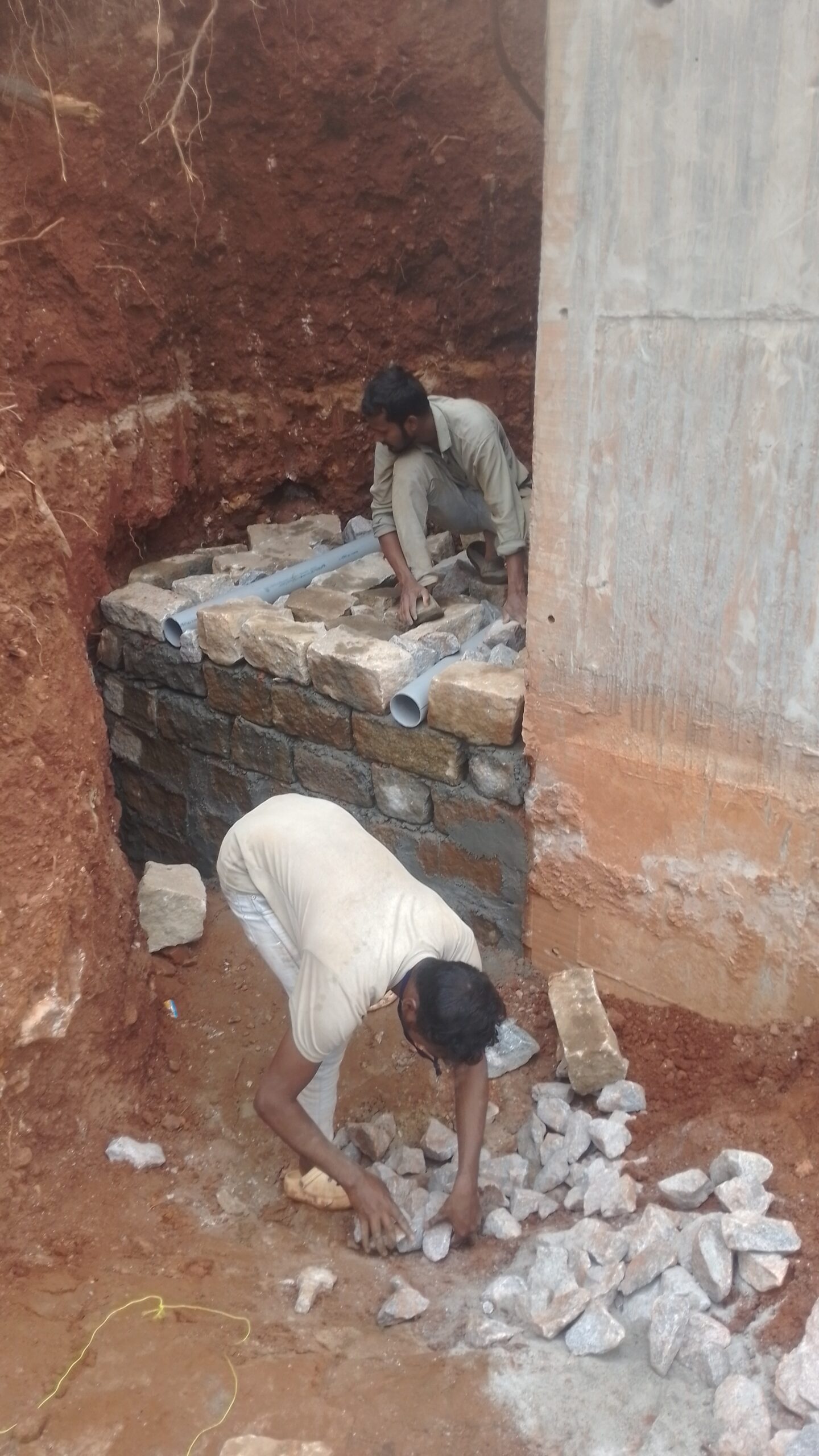
in site Workers are manually placing natural stones to build a retaining wall while PVC pipes are installed through the wall to allow water to escape.
In this type of construction is common in residential projects, road works, irrigation structures, bridge approaches, and hillside developments where earth pressure must be controlled safely.
This article explains every stage of the work, from excavation to completion, using practical site engineering concepts and quality control measures.
Understanding the Project
The image illustrates an excavation carried out beside an existing reinforced concrete structure.
The excavation has exposed a vertical soil face, and a stone masonry retaining wall is being built to support the soil and protect the nearby concrete member.Several important construction activities are visible:
Several important construction activities are visible:
Excavation close to an existing structure.Manual dressing and placement of natural stones.Cement mortar being used to bond the stones.
PVC drainage pipes inserted through the wall.Workers carefully positioning individual stones for proper interlocking.
Why a Retaining Wall Is Necessary;
When soil is excavated, the natural support provided by the surrounding ground is removed. Soil begins to exert horizontal pressure against any exposed face. If this pressure is not resisted, the excavation may collapse.
A retaining wall is constructed to:
Support excavated soil.Prevent landslides and erosion.Protect nearby buildings.Reduce settlement around foundations.Improve drainage.Increase the stability of slopes.Without an adequately designed retaining wall, rainfall or groundwater can increase soil pressure and lead to structural failure.
SELECTION OF STONE;
quality directly influences the strength of the retaining wall.Suitable stones should have:
High compressive strength.Low water absorption.Good durability.Rough surfaces for better bonding.Adequate size.The stones visible in the construction image appear to be irregular natural stones suitable for random rubble masonry.Large stones improve stability because they reduce the number of joints within the wall.
Cement MortarThe stones are bonded using cement mortar.Depending on design requirements, common mixes include:1:4 Cement : Sand1:5 Cement : Sand1:6 Cement : SandThe mortar should have:Good workability.Proper consistency.Adequate strength.Full contact between stones.Voids inside the wall should be avoided because they reduce durability.
Importance of Drainage Pipes
one of the most noticeable features in the construction image is the PVC pipes passing through the retaining wall.These are commonly called weep holes.Their purpose is to allow accumulated water behind the wall to escape safely.
you can also click here Marking and Excavation in civil works
Share this content: